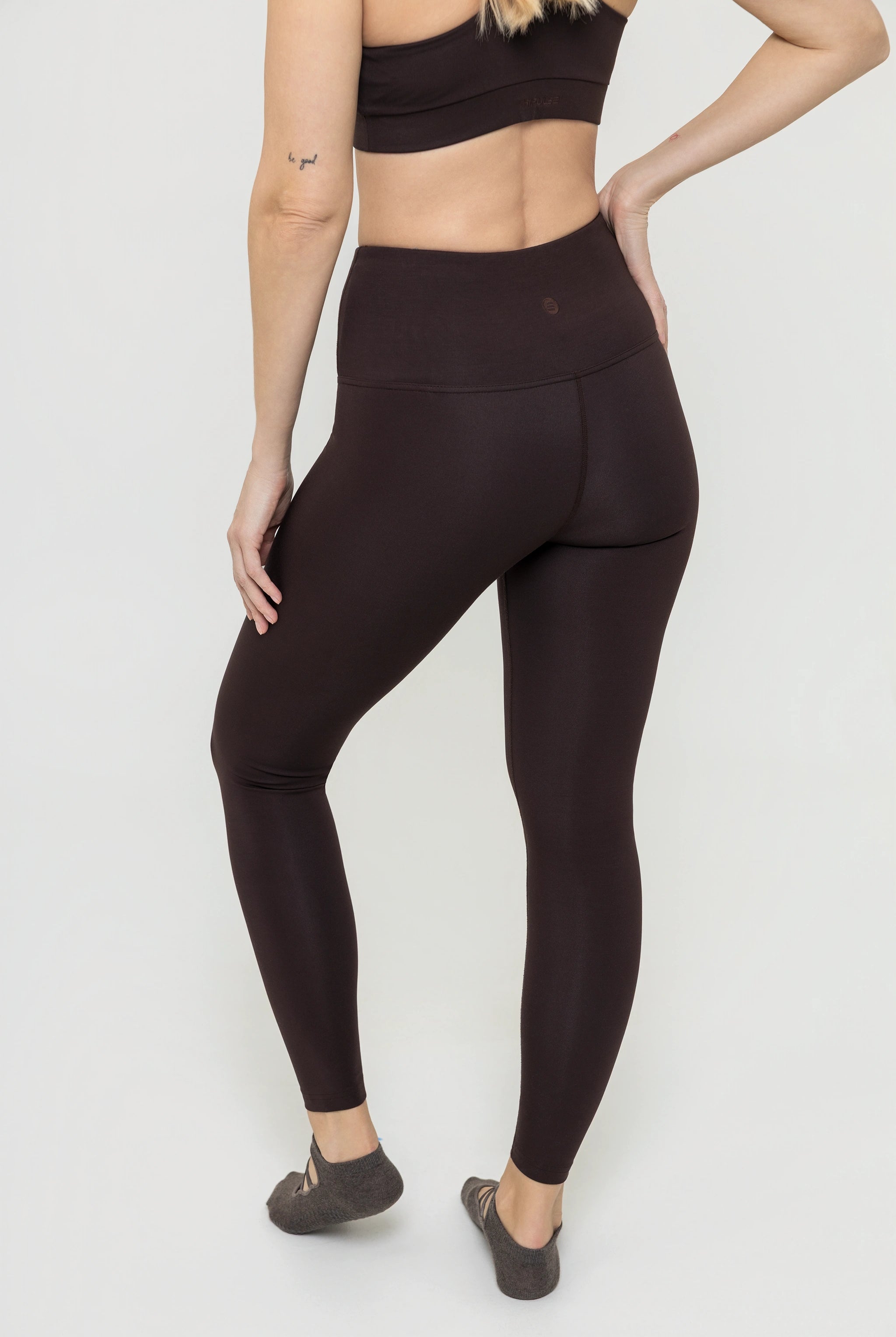
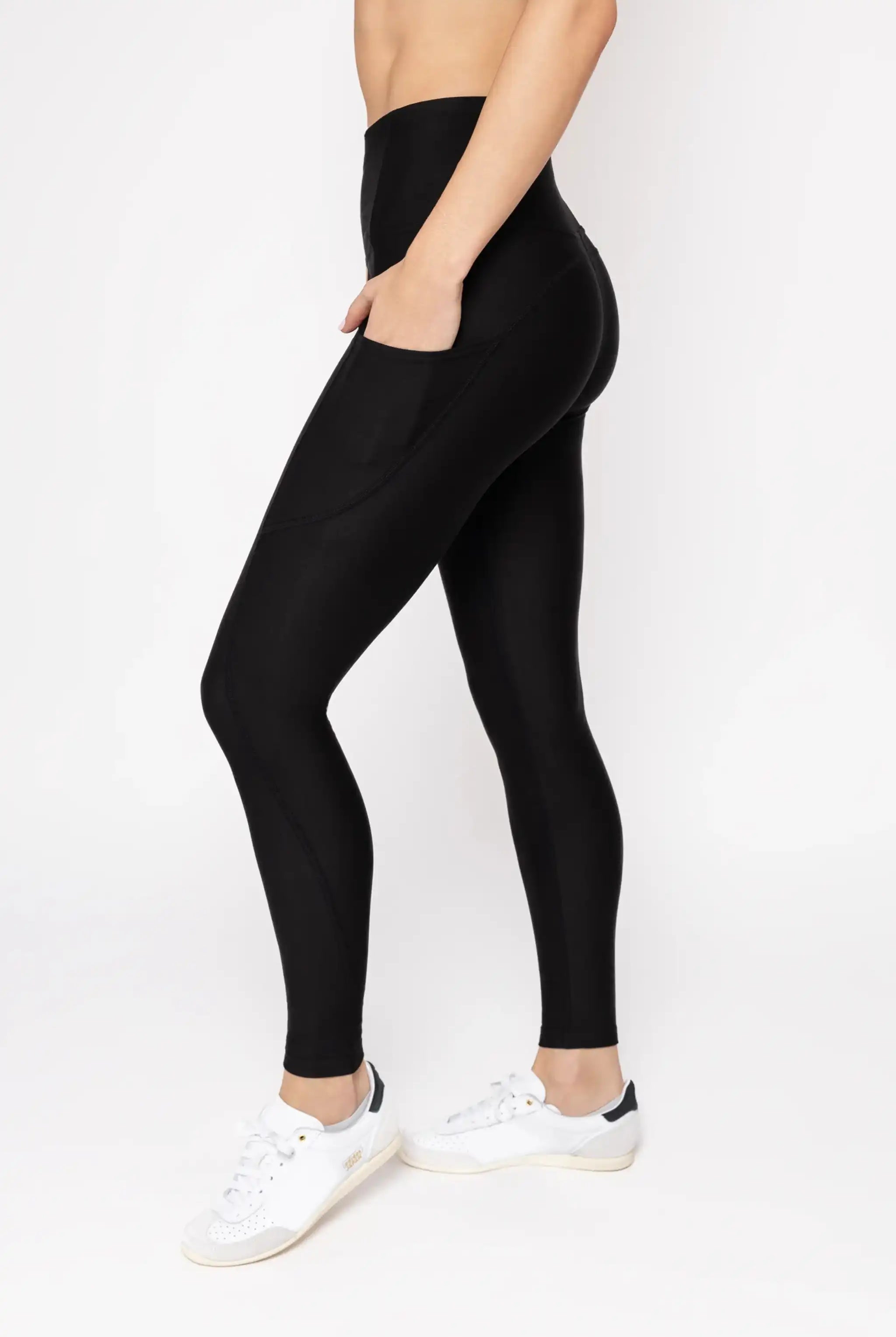
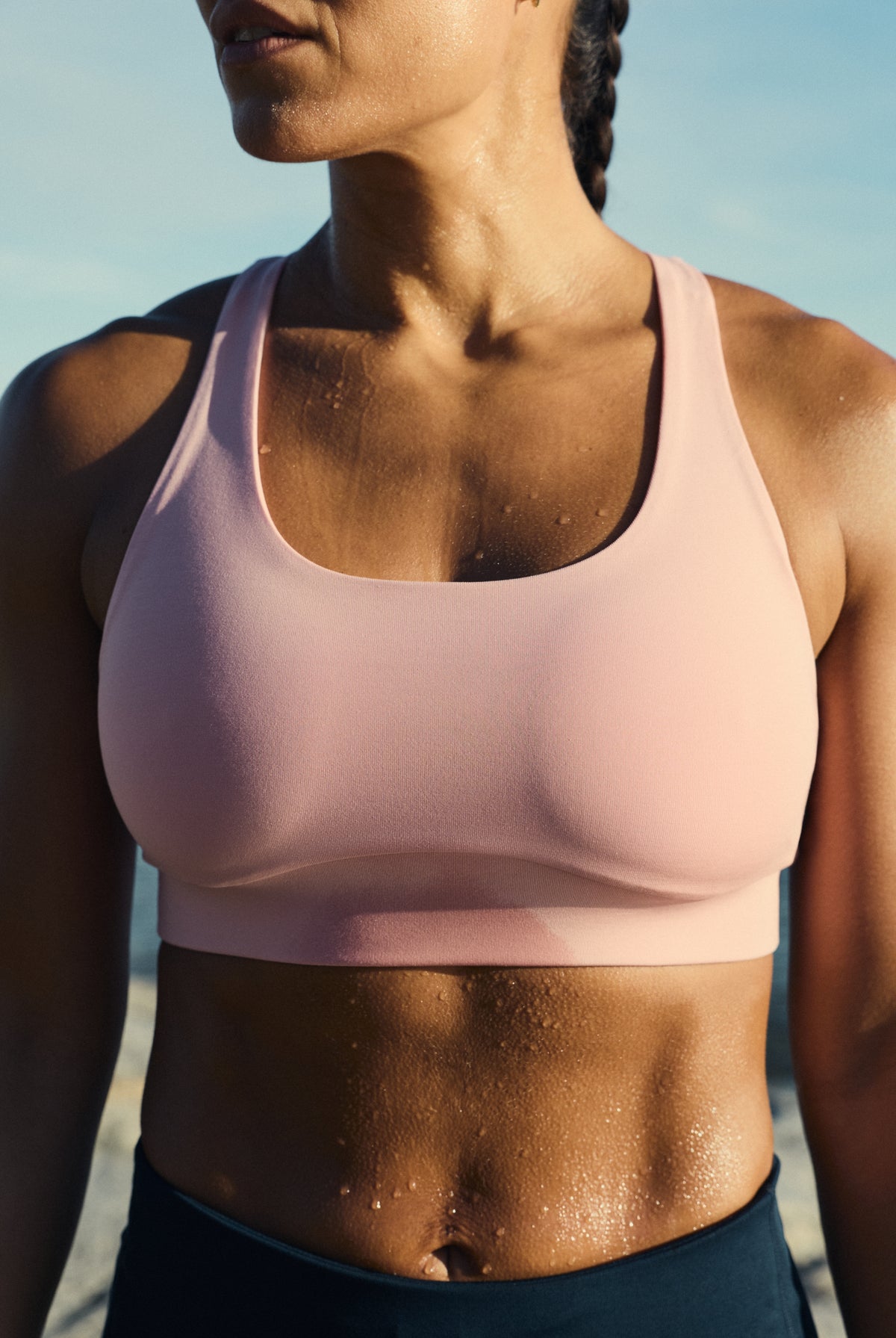
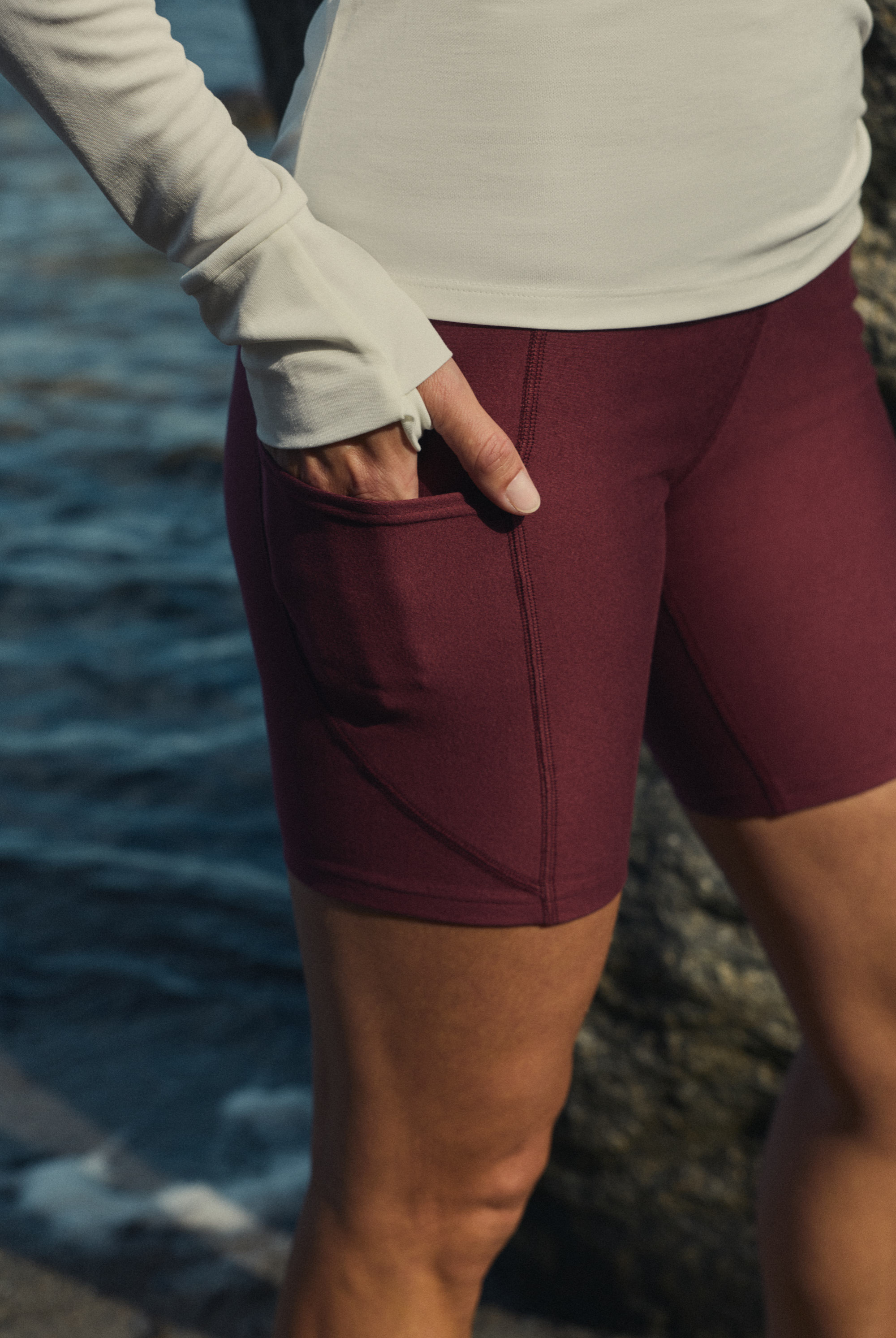
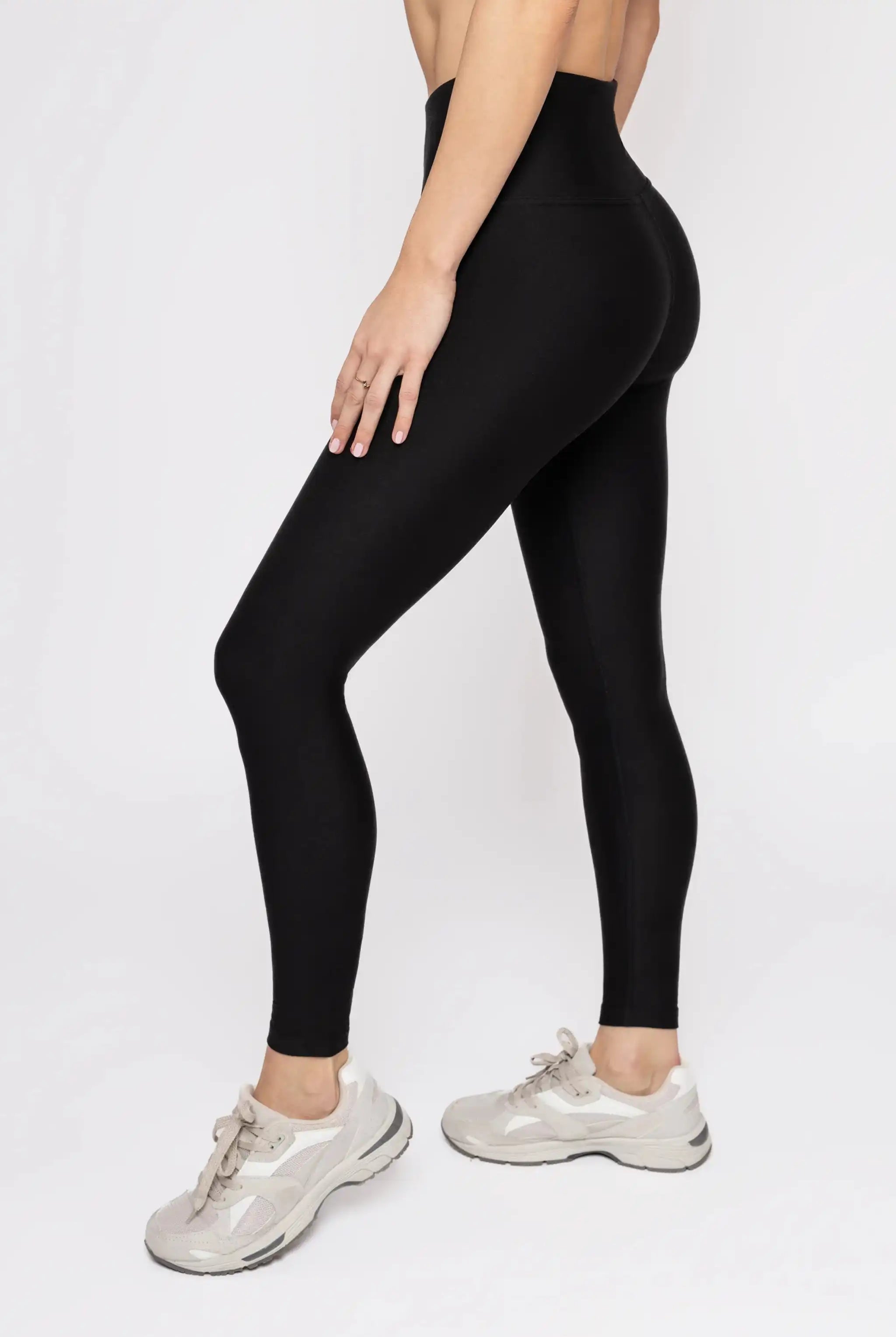
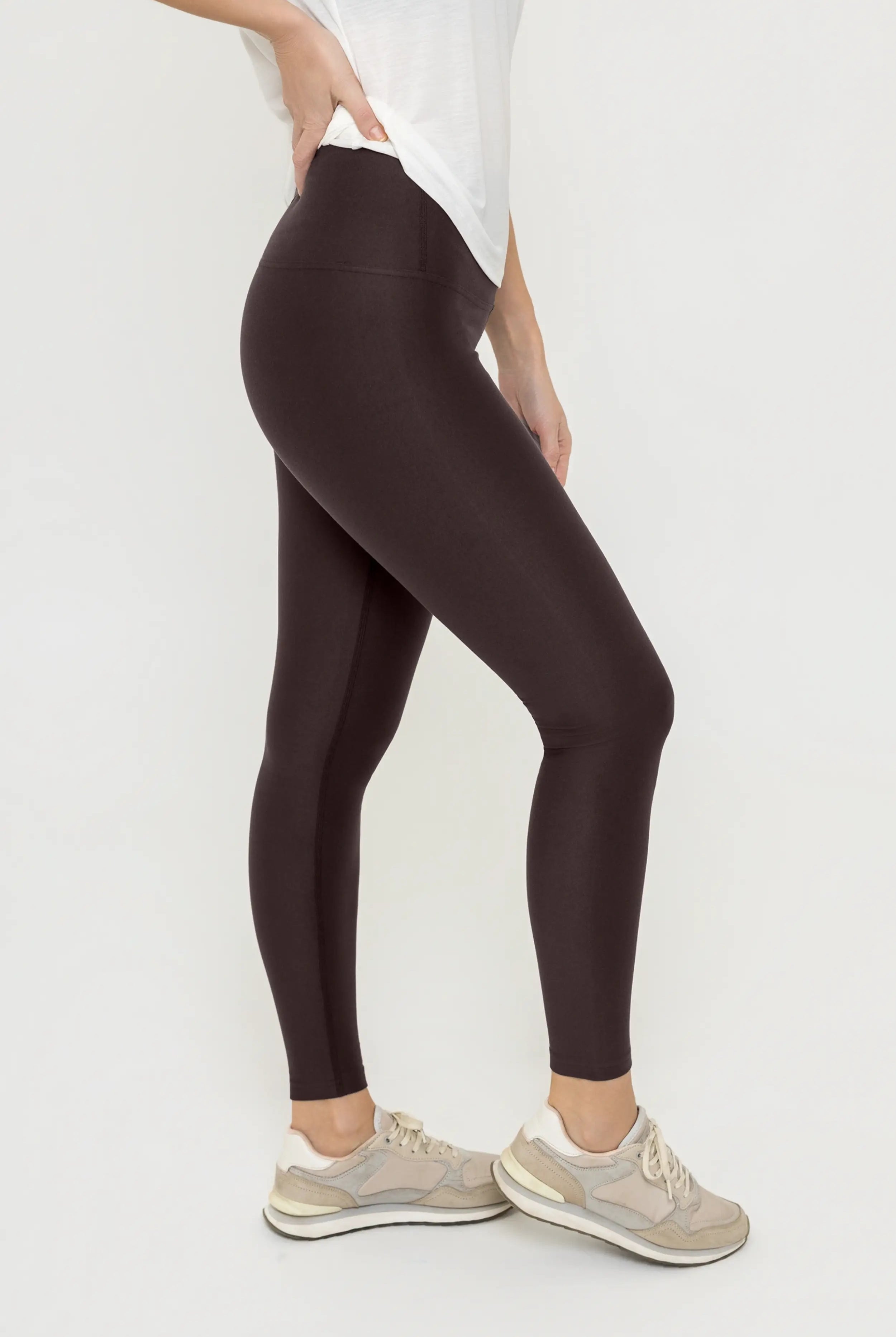
TENCEL™ Lyocell vs Nylon: What to Wear for Your Workouts
The activewear you train in sits against your skin for hours, through heat, sweat and constant movement. What it's made from shapes how you move and feel.
This guide compares TENCEL™ Lyocell and nylon activewear across breathability, sweat, odor, skin comfort, durability and impact, so you can make the best decision for your body and your workouts.
Table of contents
- Quick answer: is TENCEL™ Lyocell or nylon better for activewear?
- Why are women rethinking nylon activewear?
- What is the difference between TENCEL™ Lyocell and nylon activewear?
- What about recycled and bio-based nylon?
- How to choose high-performing TENCEL™ Lyocell activewear
- Should you choose TENCEL™ Lyocell or nylon for your workouts?
- FAQ

Quick answer: is TENCEL™ Lyocell or nylon better for activewear?
For pieces worn against the skin, TENCEL™ Lyocell offers the better balance of performance, skin comfort and less plastic against your body.
Nylon set the standard for premium performance activewear, and for good reason. It's lightweight, durable and quick-drying, which is why women have relied on it for decades. But there's more to performance than that. It's also about how a fabric feels against your skin over the hours you're wearing it.
When developed specifically for activewear, TENCEL™ Lyocell performs through demanding workouts while helping you stay cooler, fresher and more comfortable as heat and sweat build.
If you're comparing against polyester, the cheaper option found across most activewear, read how TENCEL™ Lyocell compares with polyester instead.
Why are women rethinking nylon activewear?
Across Tripulse fabric development and testing since 2019, and feedback from customers, certified instructors and coaches, the same trade-offs with nylon activewear come up again and again:
-
OVERHEATING
A lack of breathability, with heat and humidity building under the fabric as intensity rises.
-
ODOR
Smells that linger after a session, sometimes even after washing, and sometimes after just one wear.
-
SKIN IRRITATION
Itching, redness or discomfort during and after a workout.
-
WHAT IT PUTS ON THE SKIN
Fully synthetic fabric and the chemical treatments used on it, against the body when you're hottest and sweatiest.
Most of these have been quietly accepted for years as simply part of exercising. For a long time there wasn't much of an alternative, so it stopped being a question.
That's changed in recent years. Of everything we've tested and worn, TENCEL™ Lyocell is the one we've seen keep up with nylon through real training.
EXPLORE TENCEL™ Lyocell COLLECTION
What is the difference between TENCEL™ Lyocell and nylon activewear?
TENCEL™ Lyocell is a wood-derived fiber made by Lenzing in a closed-loop process. Nylon, also called polyamide on European care labels, is a synthetic fiber usually made from petroleum. They differ in how they handle sweat and odor, how they feel against the skin, and what goes into making them.
Which is more breathable, TENCEL™ Lyocell or nylon?
TENCEL™ Lyocell tends to feel cooler and more breathable, especially in close-fitting pieces like leggings and sports bras. That's because it absorbs and quickly releases the moisture and humidity building up next to your skin, rather than leaving it sitting against you.
Nylon takes in far less. It works by moving sweat through the fabric so it can evaporate, which is effective when there's airflow. In tighter, more fitted styles, though, sweat and humidity can build faster than they can escape, often resulting in a warm, clammy feeling partway through a session.
The difference in how much moisture each fiber can take in is significant. Under standard testing conditions, TENCEL™ Lyocell has a moisture regain of around 11.9%, compared with 4.1% for nylon 6,6, nearly three times as much.
- 88% experienced superior breathability.
- 73% experienced superior moisture wicking.
The results come from 51 verified Tripulse customers who trained in our activewear and compared the experience with their previous synthetic activewear during our performance study.
Worth knowing:
The fiber sets how much humidity a fabric can absorb, but how it's knitted, how thick it is and how closely it fits all affect airflow too. It's why some TENCEL™ and nylon pieces feel more breathable than others.

Does nylon or TENCEL™ Lyocell dry faster?
Nylon tends to dry faster. It holds less water inside the fiber, so there's less to evaporate once you've taken it off.
TENCEL™ Lyocell takes more moisture into the fiber, so it can take a little longer to dry once you've taken it off. But while you're wearing it, that helps keep sweat from sitting against your skin, so you can still feel dry and comfortable through your workout.
A lightweight TENCEL™ top may still dry faster than thicker nylon leggings, so fiber type isn't the only thing that determines drying time.
Does TENCEL™ or nylon stay fresher for longer?
TENCEL™ Lyocell stays fresher for longer than nylon.
Odor-causing bacteria need moisture, which is why they thrive in warm, humid conditions. TENCEL™ Lyocell takes more sweat into the fiber, leaving less sitting on the surface for those bacteria to feed on.
With nylon, more stays on the surface until it evaporates, giving bacteria more chance to multiply and create odor.
A 2010 study, published in the Journal of Applied Microbiology and co-authored by a Lenzing researcher, applied human sweat to knitted fabrics made from TENCEL™ Lyocell and a range of synthetics, then measured the bacteria that grew on each. Nylon was among the highest for bacterial growth, while TENCEL™ was among the lowest.
Some nylon activewear uses added antimicrobial finishes to manage odor. TENCEL™ Lyocell works differently: the way the fiber handles moisture helps it stay fresher without an added antimicrobial treatment.

Worth knowing:
Airing pieces out straight after a workout, rather than leaving them in a bag, makes a real difference to how fresh they stay. That goes for TENCEL™ and nylon alike.
Fewer washes, fresher for longer.
See the TENCEL™ Lyocell pieces our customers wear again and again.
Is TENCEL™ Lyocell or nylon better for sensitive skin?
TENCEL™ Lyocell is generally the gentler choice, especially if your skin becomes itchy or uncomfortable once you start to sweat.
Skin that's warm, damp and under friction is more easily irritated, and activewear is worn in exactly those conditions. Sweat sitting against the skin can also encourage bacteria and yeast to build up, which may aggravate eczema-prone or easily irritated skin.
This is where TENCEL™ Lyocell can make a noticeable difference. It helps keep excess sweat from sitting against your skin, while its smooth fiber surface feels softer and more comfortable as you move.
Nylon is smooth too, and plenty of people wear it without any reaction at all. But it absorbs much less moisture, so more sweat and bacteria stays on the surface against your skin. It's also commonly colored with disperse dyes, which are a known trigger for skin reactions in some people, with sweat and heat bringing those dyes into closer contact.

Worth knowing:
Fiber is only part of the picture. Any fabric can be dyed or finished with substances that some people react to, TENCEL™ Lyocell included. Look for independent certification such as OEKO-TEX® Standard 100, which tests the fabric, dyes and finishes rather than just the fiber.
"My skin is very sensitive and responds immediately if I'm wearing synthetic fabrics. Thanks to Tripulse I can just work out without worrying about getting a reaction because the fabric is skin-friendly and it feels so smooth on my skin."
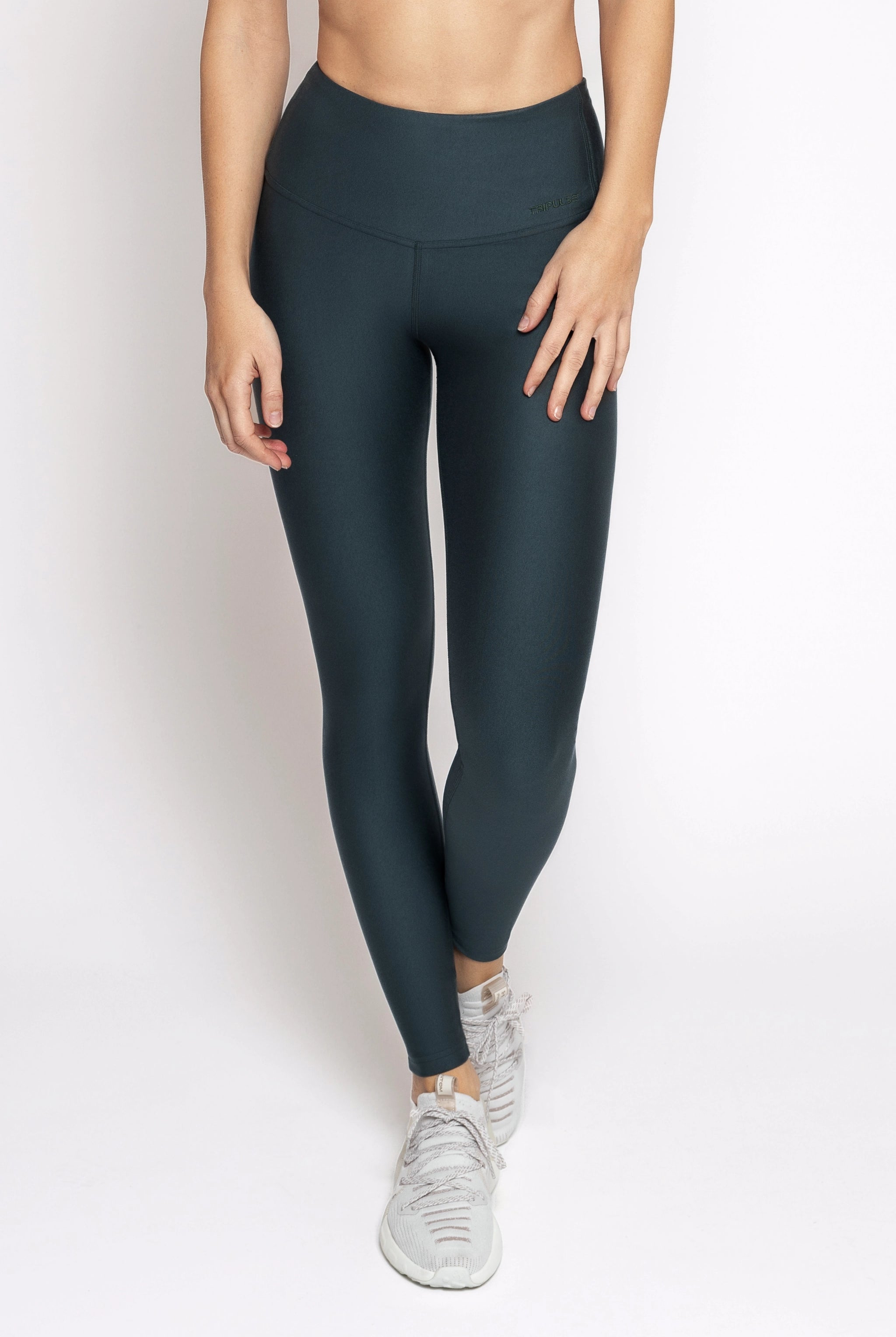
Helena, verified Tripulse customer, wearing Original TENCEL™ Leggings
Does TENCEL™ Lyocell activewear last as long as nylon?
Both are durable fabrics. Nylon's toughness is a large part of why it's dominated activewear for decades, and that reputation is earned.
Nylon does have an advantage in abrasion resistance, so it tends to cope better with repeated friction against rough surfaces. TENCEL™ Lyocell can show surface wear sooner depending on how the activewear has been made.
That doesn't mean nylon is the only fabric capable of lasting through regular training. TENCEL™ has a high tenacity profile, meaning it's strong and keeps much of that strength when wet. For activewear that gets sweaty and washed regularly, that helps a piece hold up over time. From our own development, testing and customer insights, well-made TENCEL™ Lyocell can hold its shape and finish through years of regular training.

Is TENCEL™ Lyocell a healthier and more sustainable choice than nylon?
If you're looking to reduce the plastic against your skin and choose activewear with a lower environmental impact, TENCEL™ Lyocell is the more considered choice.
Cleaner against your skin than nylon
TENCEL™ Lyocell helps you stay fresh and comfortable without relying on added wicking or odor-control treatments. TENCEL™ fibers from Lenzing are also OEKO-TEX® STANDARD 100 certified for harmful substances.
Some nylon activewear uses added wicking or antimicrobial finishes to help manage sweat and odor, while outdoor pieces may also use water-repellent treatments. Nylon can meet high skin-safety standards too, so look for independent certification on the finished garment.
Made in a closed loop, not a linear one
Nylon comes from crude oil and takes a lot of energy to turn into fabric. The European Environment Agency ranks it highest of the common fibers for both climate impact and fossil resource use. TENCEL™ Lyocell comes from responsibly managed certified forests, made in a low impact circular process using a single non-toxic solvent, NMMO, of which over 99% is recovered and reused.
The TENCEL™ Lyocell fiber itself is certified biodegradable in soil, water and even home compost by TÜV AUSTRIA. Nylon is not biodegradable, and recycling remains limited, meaning much of it ultimately ends up in landfill or incineration.
Doesn't shed plastic microfibers the way nylon does
Nylon releases microplastic fibers as you wear and wash it. TENCEL™ Lyocell is wood-based, so the fibers it releases are plant-based, not plastic-based.
Synthetic fabric is rarely just the fiber, either. Dyes, additives and finishes can be released alongside the microfibers clothing sheds. Research has found that chemicals in textiles can also transfer into sweat, making this especially relevant for activewear. We look more closely at how this happens, and what it means, in our guide to how to avoid microplastics in clothing.
Is TENCEL™ Lyocell activewear plastic-free?
Not always. TENCEL™ Lyocell fiber itself is wood-derived and plastic-free, but close-fitting activewear like leggings, shorts and sports bras needs some stretch fiber for movement, fit and recovery.
That's why our fitted pieces pair TENCEL™ Lyocell with ROICA® eco-elastane, so they aren't fully plastic-free. Our tops are 100% TENCEL™ Lyocell because they don't need stretch in the same way.
Learn more: Why Elastane is Used (And Safer Stretch Alternatives)
What about recycled and bio-based nylon?
Both improve on virgin nylon, and both are worth understanding properly.
Recycled nylon
Made from waste, usually manufacturing scraps or discarded fishing nets. The best known is ECONYL®, produced by Aquafil, which can be recycled repeatedly. Using waste instead of new oil is a genuine gain.
It's still nylon, though. It doesn't biodegrade, and it sheds microfibers in the same way. There's also the question of what came before: recycled nylon starts life as something else, and whatever was used on it then can still be present. The OECD notes that chemical information is often incomplete or lost along recycling chains, which is why testing on the finished garment often matters more than the recycled claim alone.
Bio-based nylon
Replaces some or all of the oil with plants. Corn, sugarcane, castor and agricultural leftovers can all be turned into the chemical building blocks nylon is made from.
Starting with a crop rather than a fossil fuel is a real improvement. But bio-based nylon is chemically the same material as conventional nylon, so it behaves the same way once it's a fabric: it lasts a long time, it doesn't break down, and it sheds plastic microfibers. As Textile Exchange puts it, bio-based and biodegradable are two completely different qualities.
The impact also tends to move rather than disappear. There are concerns around food security, deforestation and land use, and no single perfect feedstock: how much difference it makes depends on the crop, the region and how it's grown. Used responsibly, though, these materials have real potential.
What to look for
Global Recycled Standard certification confirms the recycled content is genuine, rather than just claimed. And OEKO-TEX® Standard 100 on the finished garment tells you what's actually in it.
How to choose high-performing TENCEL™ Lyocell activewear
Not all TENCEL™ activewear performs the same. Two pairs of leggings can both carry the name and feel completely different, because the fiber is only part of what makes a piece keep up, across every kind of workout and everything in between.
Five things help decide whether a piece truly performs. Here's what to look for, and the standard we hold every Tripulse piece to.

✓ Fiber percentage: look for 80% or above
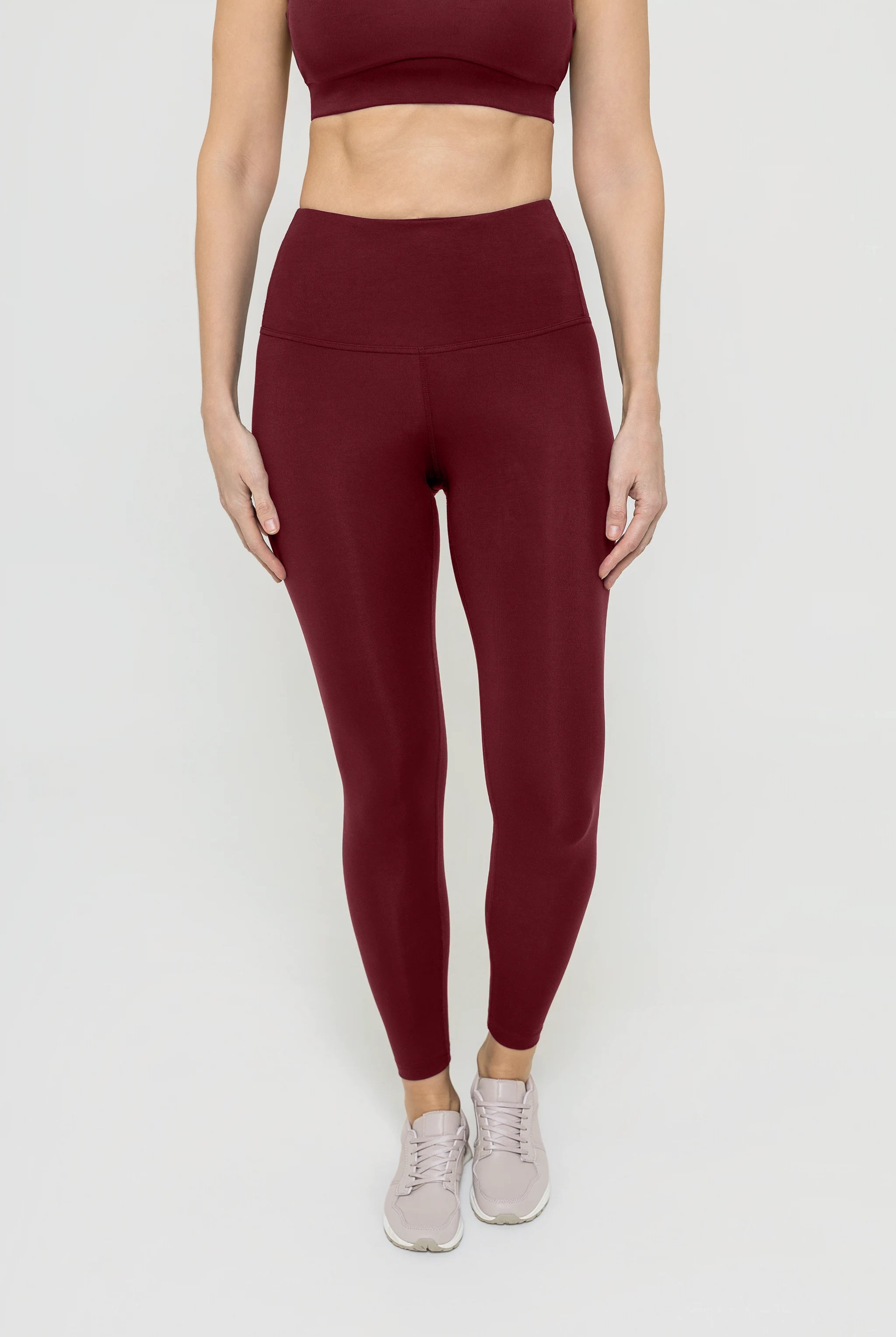
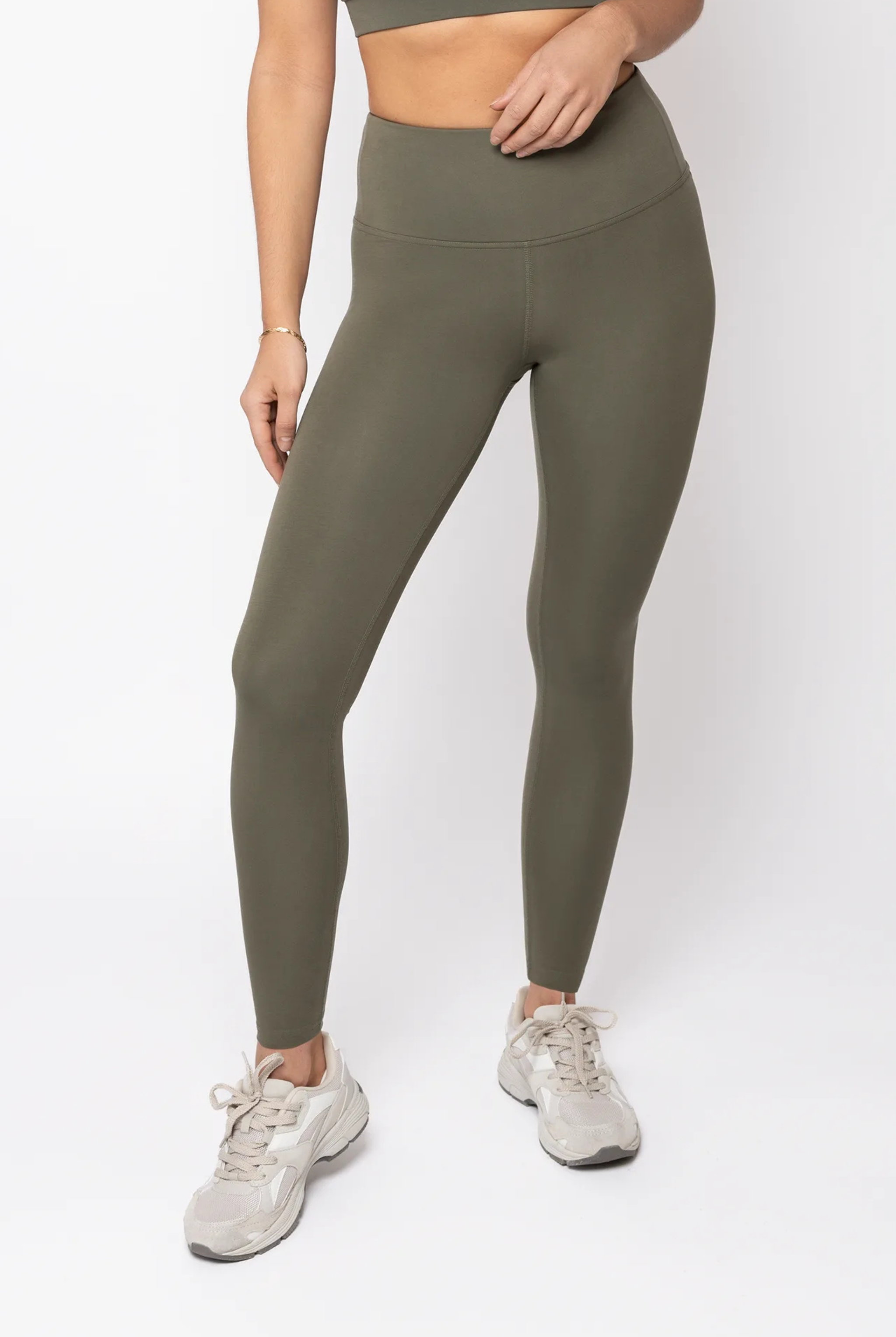
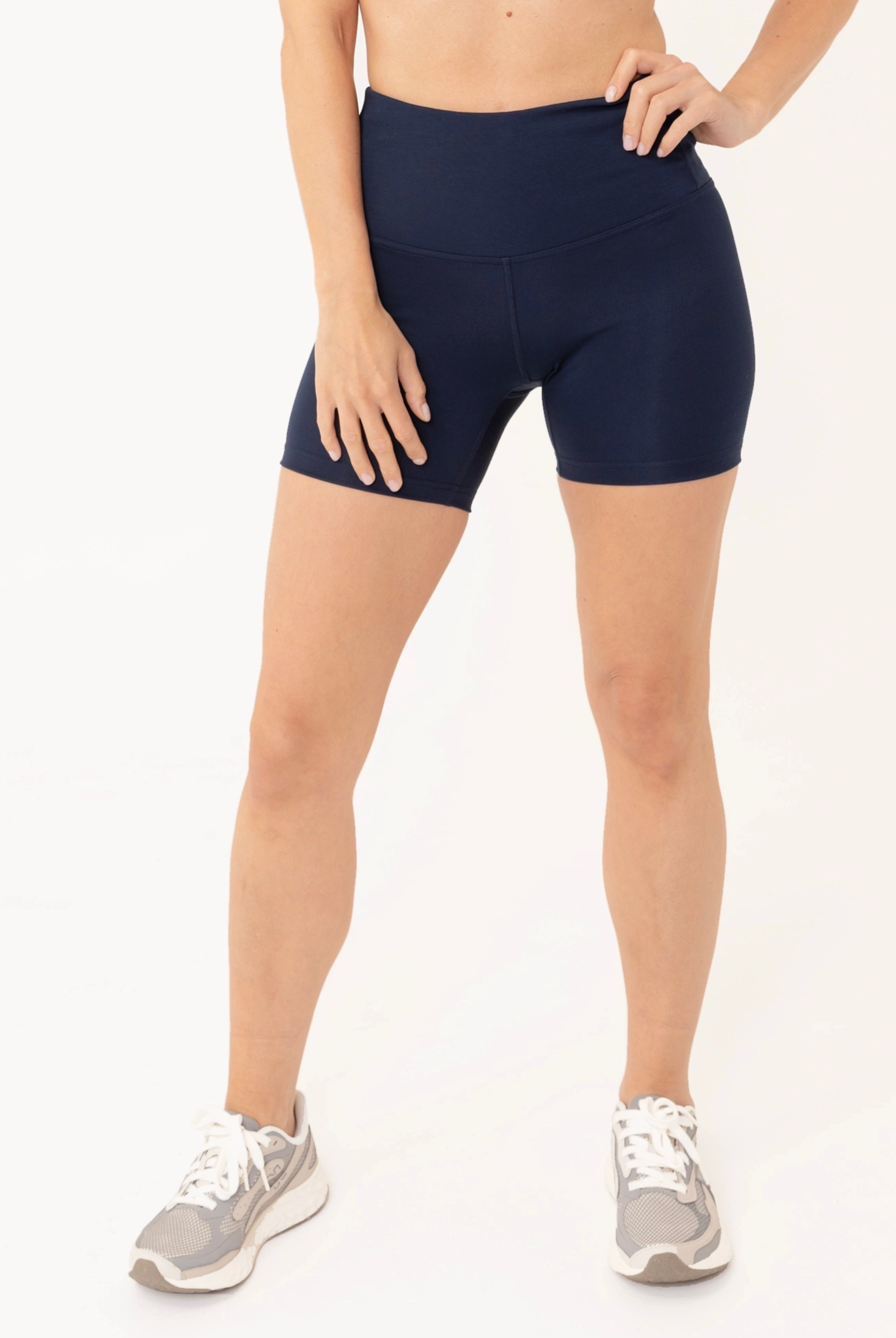
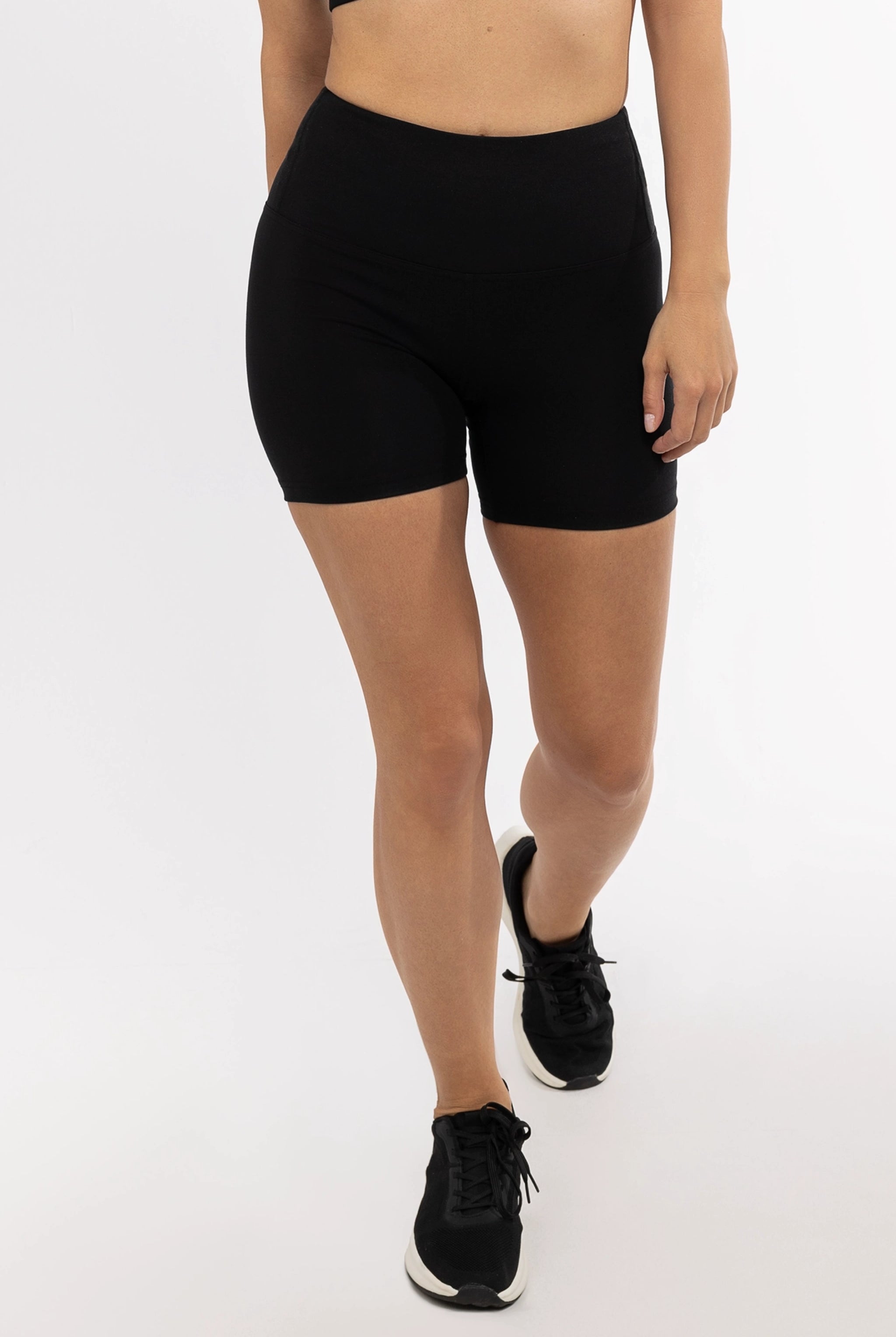
Check the percentage before anything else. At 80% and above, you feel what you're paying for. Below that, the breathability, freshness and softness scale down with it, and the lower the number, the more you're buying whatever the TENCEL™ is blended with, usually polyester or nylon. Our leggings, shorts and sport bras are 84 to 86% TENCEL™ Lyocell from Lenzing selected specifically for performance, with 14 to 16% ROICA® eco-elastane. Our performance tops are 100% TENCEL™ Lyocell.
✓ Stretch: a skin-safe alternative to conventional elastane
Most brands list the percentage but not what kind of elastane it is. If a brand names its stretch fiber and can tell you what it's certified to, that's a good sign.
For the pieces that need stretch, we use ROICA® eco-elastane. Depending on the piece, we use either a version designed to gradually break down, with Cradle to Cradle Gold certification for material health, or one made partly from recycled production waste. Both are OEKO-TEX® Standard 100 certified.
✓ Construction that holds up in real movement
Look for TENCEL™ activewear brands that design for movement, not just fabric. Fiber alone doesn't decide whether a piece holds up once you're moving.
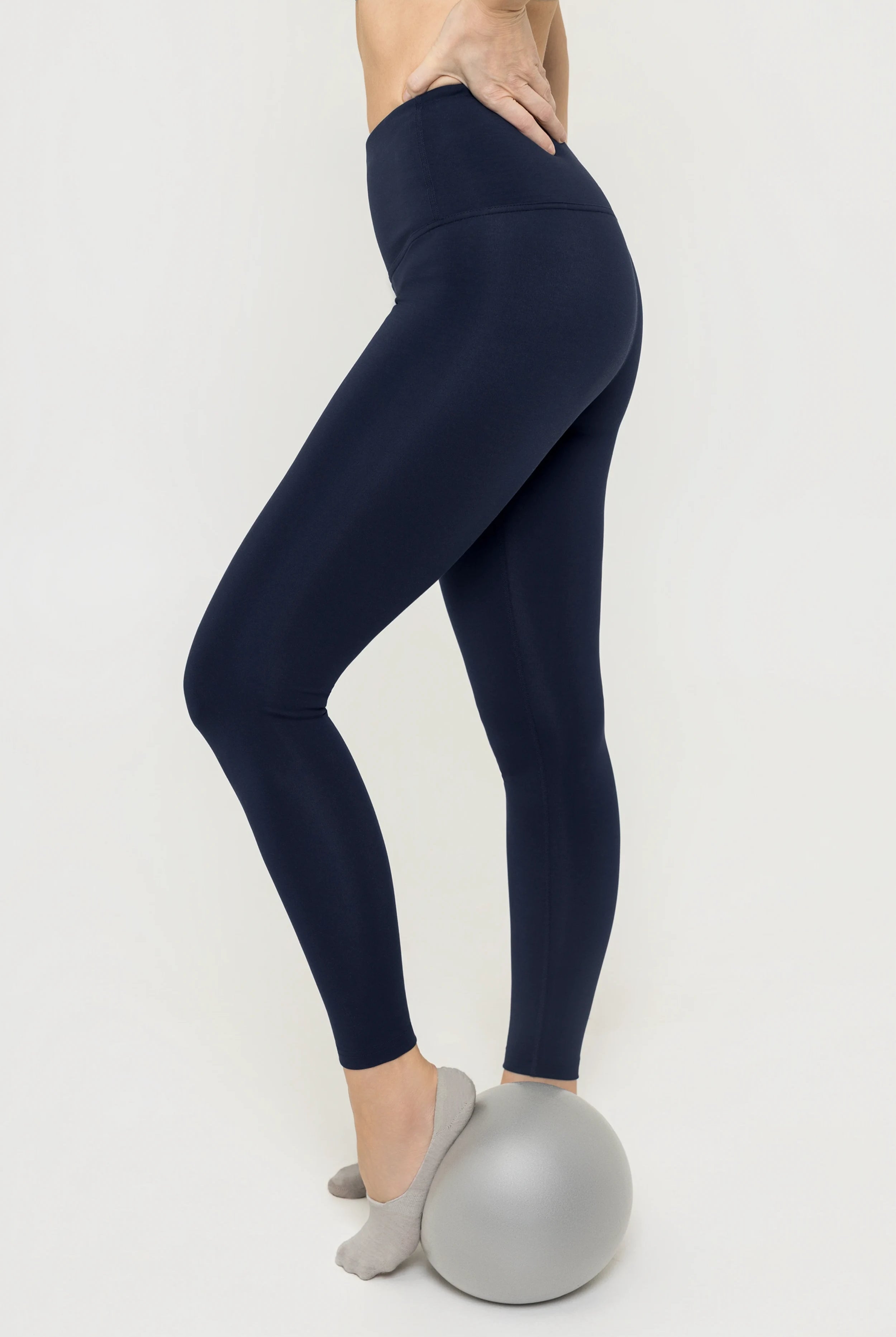
At Tripulse, construction is part of the design process from the start: a knit dense enough to stay non see-through during a deep squat, seams that don't chafe or wear through where friction is highest, waistbands that stay in place no matter how hard you push, and compression that supports without feeling restrictive.
✓ Evidence it performs, not just claims that it does
The useful question isn't whether a brand says its pieces perform, but whether it can show you results from people who've actually worn them.
That's why our Performance Study asked 51 verified customers to compare their Tripulse pieces against the activewear they'd worn before, after three months or more of use.
✓ High standards across manufacturing, health and sustainability
Look for brands that hold themselves to real standards and can show you the proof. A transparent supply chain means knowing exactly where fabrics come from, who makes the activewear and what conditions they're made under.
Every material in a Tripulse piece is OEKO-TEX® Standard 100 certified and REACH compliant, and all our activewear is made in a GOTS-certified factory in Portugal. We also commission independent lab testing for PFAS and bisphenols. In our most recent Bureau Veritas testing, none were detected.
Want to take a closer look?
See the materials, certifications and supply chain behind Tripulse activewear.
Should you choose TENCEL™ Lyocell or nylon for your workouts?
Choose TENCEL™ Lyocell if you:
- run hot, or find your leggings get warm partway through a session
- want activewear that stays fresher for longer, so you can wash it less
- have sensitive or easily irritated skin
- want to reduce the amount of fossil-based plastic you wear against your skin
- want versatile pieces that perform across everything from Pilates and strength training to running and HIIT
Choose nylon if you:
- prioritize the fastest possible drying time. Nylon generally dries faster than TENCEL™ Lyocell, which may matter more for pieces like swimwear
- need something particularly hard-wearing for technical outerwear or gear exposed to rough surfaces
- already own nylon activewear that feels good, performs well and works for you
Note:
For anything worn against the skin, we'd still choose TENCEL™ Lyocell. Nylon dries faster, but for us, a little extra drying time is a fair trade for a cooler, more comfortable feel against the skin and far less reliance on fossil-based synthetics. It comes down to which trade-offs matter most to you.
FAQ
Is TENCEL™ Lyocell only suitable for yoga and low-impact workouts?
No, though you'll see that claim a lot. When developed specifically for activewear, TENCEL™ Lyocell can perform through running, HIIT and strength training as well as Pilates and lower-impact movement. The blend and construction matter just as much as the fiber itself.
Learn more: Can Natural Fiber Activewear Really Replace Synthetics?
Should I look for a TENCEL™ and nylon blend instead?
A blend will feel softer than pure nylon. But the qualities that make TENCEL™ worth choosing, how it handles heat, sweat and odor, scale with how much of it is in the fabric. The less there is, the less you'll feel those benefits. As a rule, look for 80% or above.
Are TENCEL™ leggings squat-proof?
It depends on the garment rather than the fiber. Whether a piece stays covered under stretch comes down to knit density and fabric weight, which is why two pieces in the same fabric can perform very differently. Tripulse leggings are knitted and tested to make sure they don't go see-through in a deep squat.
Does TENCEL™ Lyocell rub or chafe like some synthetics can?
TENCEL™ Lyocell is smoother against skin than most synthetics, and it keeps skin drier, which is where chafing starts. Seams matter too, whatever the fabric. For example, Tripulse activewear uses flatlock seams, which lie flat against the skin rather than forming a raised ridge, with no hardware or edges that dig in.
Why is TENCEL™ activewear more expensive than nylon?
TENCEL™ Lyocell costs more than nylon to produce. It comes from certified forests and is made in a closed-loop process that recovers and reuses its solvent, which is a more involved process than making a petrochemical fiber. Then there's the garment. Two pieces can both say TENCEL™ and cost very differently depending on how much of it is in the fabric, what it's blended with, whether the stretch component is certified, where it's made and whether anything has been independently tested. Cheaper TENCEL™ activewear usually means a lower percentage, blended with traditional synthetics, and often without certification for skin safety or for the conditions it was made in. The standards behind a piece are what you're paying for, and they're what decide how it performs, how long it lasts, and what you're wearing against your skin.
Is TENCEL™ Lyocell activewear difficult to care for?
No. A cool wash, mild detergent and air drying are usually all it needs. Avoid fabric softener and high heat to help protect the fabric and stretch over time. Airing your activewear after training can also help it stay fresher between washes. Read the Tripulse TENCEL™ Lyocell care guide.
Is polyamide the same as nylon?
Yes. Polyamide is the technical family name for the fiber, and it is the word you will usually see on care labels in Europe, while nylon is the common name for the same material. EU textile labeling law lists the two as one fiber name, "polyamide or nylon." If your activewear label says polyamide, everything in this comparison applies to it.
TENCEL™ Lyocell vs nylon activewear: the bottom line
Nylon earned its place in activewear through strength, durability and fast drying. Where it struggles is the part you feel most: heat and sweat sitting against your skin, odor that builds, and hours of contact with a fully synthetic fabric.
That's what TENCEL™ Lyocell changes. When developed specifically for performance, it lets you prioritize breathability, freshness and skin comfort, and rely far less on plastic, without giving up the support and durability you expect.
Just remember that not all TENCEL™ activewear is made to the same standard. Check the fiber percentage, the type of stretch, the construction, the certifications, and whether there's evidence it performs.
If TENCEL™ Lyocell feels like the better fit for you...
Try Tripulse in your own workouts, with 45 days to see how it feels, fits and performs.

For more, visit:
- Can Natural Fiber Activewear Really Replace Synthetics?
- Plastic-Free Activewear: Why Elastane Is Still Used
- How to Find PFAS-Free Activewear That Actually Performs
- How to Avoid Microplastics in Clothing
- The Complete Guide to Itchy Skin During & After Exercise
About the contributors
Written by Christie Johnson, a wellness and sustainability writer who has been publishing since 2020. Since 2023 she has written about performance fabrics and how materials behave in real movement. A certified Pilates teacher, she trains and teaches in Tripulse TENCEL™ Lyocell activewear, giving her first-hand experience of how natural fabrics perform during training.
Developed with Franziska Mesche, Founder and CEO of Tripulse. Since 2019 she has sourced and tested a wide range of natural and synthetic activewear fabrics, working across TENCEL™, polyester, merino wool and conventional synthetics. Years of hands-on product development have built her practical expertise in how performance materials behave in real athletic use.
All material, certification and performance claims are verified by Franziska Mesche before publication.